
What to Expect at Your First EDS Appointment | Pacific Clinic

EDS: What Is It?

Have you been told for years that your symptoms are “just anxiety,” that you are simply flexible, or that you just have unexplained pain? Have you started hearing about EDS and wondering if you might have Ehlers-Danlos syndrome?
You are definitely not the only person who has asked us this question.
Ehlers-Danlos syndrome (EDS) is a group of genetic connective tissue disorders. They can affect many different parts of the body, including the joints, skin, blood vessels, and other tissues. There are also several different types of EDS, and they do not all look the same. In some forms, a specific genetic change can be identified. In the case of hypermobile Ehlers-Danlos syndrome (hEDS), however, the specific genetic cause is still unknown, so the diagnosis is currently based on clinical findings.
This is one of the reasons an EDS diagnosis cannot be established simply by checking whether someone is “double-jointed.”
For many people, getting a proper EDS diagnosis can be a challenging experience. Symptoms may involve multiple body systems (i.e. muscles and joints as well as circulation and blood vessels), and there can be significant overlap between EDS, hypermobility spectrum disorders, and other connective tissue or musculoskeletal conditions. So, how is EDS properly diagnosed? The answer depends on the particular type of EDS being considered, but it starts with a thorough evaluation.

How Is EDS Diagnosed?
There is not one blood test that will tell you whether you have EDS.
The current EDS diagnostic criteria come from the 2017 International Classification of the Ehlers-Danlos Syndromes. These criteria established the diagnostic framework for the different EDS subtypes and also introduced the concept of hypermobility spectrum disorders (HSD).
The 2017 criteria remain the current clinical framework for hEDS diagnosis, although an international effort is underway to review and potentially refine the criteria as research continues.
For hypermobile EDS (hEDS), the diagnosis is clinical. This means we look at your medical history, family history, symptoms, use physical examination findings, and if you check enough boxes helps determine if you meet the established diagnostic criteria.
One part of the evaluation you may have heard about is the Beighton score. This is a standardized assessment used to evaluate generalized joint hypermobility by looking at movement in several different joints.
While the Beighton score is an important part of the evaluation, it is also only one piece of the puzzle. Having a high Beighton score alone does not automatically mean that someone has hEDS.
The 2017 criteria for hEDS include three main components that need to be considered together:
Generalized joint hypermobility
A combination of specific systemic features, family history, and/or musculoskeletal complications
Exclusion of other conditions that could better explain the findings
That last component is especially important.
Other Conditions That May Look Like EDS
There are several conditions that mimic EDS or can present with similar features. These may include other heritable connective tissue disorders such as Marfan syndrome, Loeys-Dietz syndrome, other genetic disorders, and certain acquired or inflammatory conditions.

This is why simply finding joint hypermobility is not enough to make an EDS diagnosis. We want to understand why someone is hypermobile and whether their overall pattern of symptoms and physical findings fits a particular diagnosis.
This is also where understanding hypermobile EDS vs. hypermobility spectrum disorder becomes important.
A person can have significant joint hypermobility and related symptoms without meeting all of the criteria for hEDS. In that situation, they may be diagnosed with HSD.
HSD is not “nothing,” and it does not mean that someone's symptoms are imaginary or insignificant. People with HSD can experience significant pain, joint instability, fatigue, and other symptoms and deserve appropriate evaluation and treatment. For other types of EDS, genetic testing may play an important role in establishing the diagnosis. For hEDS, however, there is currently no genetic test that can confirm the diagnosis.
How Do I Get an EDS Diagnosis?
If you have been searching for how to get diagnosed with EDS, you may have discovered that finding a doctor who can do this is not always easy. This was one of the reasons I developed a specific approach to the complicated diagnostic process. The diagnosis requires your entire medical history, a thorough physical examination, detailed laboratory evaluation, as well as treatment planning. This all can't fit into one rushed appointment, so we divide the process into just three focused visits. This allows us to spend more time understanding your history, perform complete physical examination, review your results, and develop an appropriate treatment plan.
Dividing the process also allows each appointment to focus on the services being provided and, when applicable, allows visits to be billed appropriately through insurance based on the services performed.
How EDS Appointments Work
Appointment 1: History and Initial Evaluation

The initial appointment is all about getting your story recorded. We will talk about your symptoms, medical history, family history, previous diagnoses, injuries, surgeries, medications and supplements, and any patterns you may have noticed over the years.
We will also discuss symptoms that do not necessarily involve your joints. This is important because EDS and related disorders can affect more than just muscles and joints. If appropriate, we may order laboratory testing to evaluate nutritional status, metabolic health, thyroid function, inflammation, cardiovascular risk factors, and other factors that could be contributing to your symptoms.
This initial evaluation can be completed by video visit as long as you are physically located in Oregon or Washington during the virtual appointment.
Appointment 2: Physical Examination and Hypermobility Evaluation

The second appointment gives us the opportunity to take a closer look at your physical findings. This may include the Beighton score, evaluation of joint mobility and stability, skin and connective tissue findings, musculoskeletal findings, posture and movement patterns, and other findings that may help determine whether your symptoms fit the diagnostic criteria. An in-person examination is important because many components of the evaluation simply cannot be assessed adequately through a video visit, such as listening to the heart and lungs, assessing blood pressure and measuring joint ranges of motion.
Appointment 3: Results, Diagnosis, and Next Steps

During the third appointment, we bring everything together. We will review your laboratory results and physical examination findings, discuss whether you meet the criteria for hEDS or another condition, and discuss what the results mean. If hEDS does not appear to be the best diagnosis, it's important to remember that does not mean the evaluation was unsuccessful. Sometimes the evaluation points us toward HSD or another condition that needs additional investigation. The goal is not simply to give you a diagnosis. The goal is to help you understand what may be happening in your body and what you can do about it.
Can I Complete My EDS Diagnosis in One Trip?

Possibly.
If you live outside Oregon or Washington and have had difficulty finding a knowledgeable provider, you may have wondered about getting an EDS diagnosis out of state. Because naturopathic physicians are licensed to practice within specific states, there are limitations on where telemedicine visits can take place. For our practice, you must physically be located in Oregon or Washington for virtual medical appointments and at least one of these visits must be in-person for the physical exam.
However, if you are traveling from another state, we may be able to coordinate your appointments and laboratory testing into a relatively short period of time. You could travel to Portland for the in-person portion of the evaluation and complete the other appointments while you are still physically located in Oregon or Washington.
If the necessary appointments and laboratory testing can be completed within one or two weeks, this may make it possible for someone traveling from out-of-state to complete much of the diagnostic process during a single trip. You could then return home with your records and diagnostic information and bring that information to your established healthcare team for ongoing care.
This can be especially helpful for someone who has been asking, “Why is EDS so hard to diagnose?”
Unfortunately, some people have been told they do not have EDS because they do not “look like” someone with EDS, because they did not demonstrate enough flexibility during a particular examination, or simply because their previous provider was not familiar with EDS. A proper diagnostic process should be more thorough than that.
EDS and Related Disorders: What Are We Looking For?
Condition | Possible Overlap With EDS | How It Is Evaluated |
Hypermobile EDS (hEDS) | Joint hypermobility, instability, chronic pain, fatigue, multisystem symptoms | Clinical history, physical examination, 2017 hEDS criteria, and exclusion of other conditions |
Hypermobility Spectrum Disorder (HSD) | Symptomatic joint hypermobility, pain, instability | Clinical assessment when symptomatic hypermobility is present but full hEDS criteria are not met |
Classical EDS | Joint hypermobility, skin hyperextensibility, tissue fragility | Clinical findings and genetic testing when indicated |
Marfan syndrome | Joint laxity, musculoskeletal findings, cardiovascular features | Clinical and cardiovascular evaluation, with genetic testing when indicated |
Loeys-Dietz syndrome | Connective tissue findings, joint hypermobility, cardiovascular features | Clinical and cardiovascular evaluation, with genetic testing |
Other connective tissue disorders | Pain, hypermobility, skin or other systemic findings | History, physical examination, and targeted testing when indicated |
The purpose of this evaluation is not simply to put a label on your symptoms. It is to better understand what your symptoms mean so that you can receive appropriate care.
Referrals: Why Are They Needed?
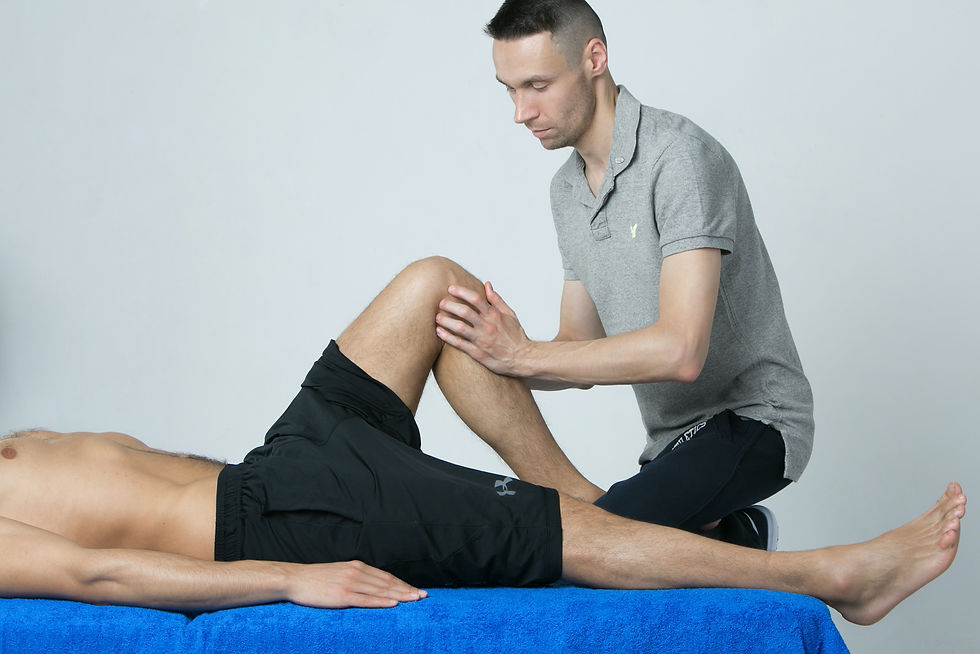
An EDS diagnosis does not mean that one provider needs to manage everything. In fact, one of the benefits of receiving an appropriate diagnosis is knowing which other providers may be helpful.
Depending on your history and examination, referrals may include a geneticist or genetic counselor if another heritable connective tissue disorder needs to be considered. Other referrals may include cardiology, physical therapy, occupational therapy, pelvic floor therapy, or other specialists depending on your individual symptoms and risk factors. For many people with hypermobility, working with a physical therapist who understands hypermobility is particularly important. The goal is generally not to stretch already-mobile joints even further. Instead, therapy often focuses on strengthening the muscles, improving joint stability and proprioception (better muscle sensing of movement), developing better movement patterns, and building confidence in using your body.
A good diagnosis can help your entire healthcare team better understand what they are treating and how to approach your care.
When Does Treatment Start?
Another aspect of naturopathic medicine that I find especially valuable is that you do not have to wait for the diagnosis to be completely established before you can start receiving support. Pain, fatigue, nutrient deficiencies, poor sleep, digestive concerns, cardiovascular risk factors, and other symptoms that are affecting your quality of life can be addressed while the diagnostic process is underway.

Treatment can begin as early as the first visit when appropriate.
For example, we may identify and correct nutrient deficiencies, support normal muscle and soft tissue function, address nutrition and lifestyle factors, support cardiovascular health, improve sleep, or discuss strategies for reducing the physical burden that hypermobility can place on your body. Then, once the diagnostic evaluation is complete, we can further refine your treatment plan. Knowing whether you meet criteria for hEDS, HSD, or another condition can help us make your care more individualized and targeted. The diagnosis isn't the end goal. It's a means to an end. The goal is to help you understand your body and give you practical tools to feel better and function better.
Want to Schedule?
If you have been asking yourself, “I think I have EDS, what do I do next?”, you do not have to figure out the entire picture by yourself.
Maybe you have a long list of symptoms that have never seemed to fit together.
Maybe you have always been hypermobile and assumed that being flexible was simply a good thing.
Maybe you have joint pain or instability, recurring injuries, unexplained symptoms involving multiple body systems, or a family history that makes you wonder about a connective tissue disorder.
Or maybe someone has already told you, “You don't have EDS,” without giving you a clear explanation as to why.
In any of these situations, a proper evaluation can give you more than just a diagnosis. It can give you clarity.
As a naturopathic doctor whose clinical focus includes EDS and hypermobility, my goal is to make the evaluation thorough, understandable, and practical. I want you to leave the process with a better understanding of your body and a clearer idea of what to do next.
So, if you are looking for an EDS specialist in Portland or Oregon, or searching for a naturopathic doctor for EDS, let's get to the bottom of what is going on together. You don't need to have all the pieces of the puzzle assembled before you schedule.

About Pacific Clinic of Natural Medicine
Pacific Clinic of Natural Medicine is a naturopathic and functional medicine clinic in Portland, Oregon, serving patients in-person and virtually throughout Oregon and Washington, with functional wellness consulting available nationwide. Our physicians are licensed naturopathic doctors — the original root-cause practitioners — specializing in hormones, gut health, nutrient status, thyroid, autoimmune conditions, chronic fatigue, and more.
📍 511 SW 10th Avenue, Suite 707, Portland, OR 97205 | 📞 503-894-8977 | pacificnaturalmedicine.com
FAQs
Can I get diagnosed with EDS just by being flexible or "double-jointed"?
No. Joint hypermobility is only one part of the picture. Hypermobile EDS (hEDS) diagnosis also requires a review of systemic features, family history, and musculoskeletal complications, plus ruling out other conditions that could explain the symptoms. Someone can be very flexible without having hEDS, and someone with hEDS can have other complicating symptoms beyond joint flexibility.
Is there a blood test or genetic test for hEDS?
Not currently. Other types of EDS can sometimes be confirmed with genetic testing, but hEDS has no identified genetic marker yet, so diagnosis is based on clinical history, physical exam findings, and the 2017 international diagnostic criteria.
What's the difference between hEDS and hypermobility spectrum disorder (HSD)?
Both involve joint hypermobility and related symptoms, but HSD is diagnosed when someone doesn't meet the full criteria for hEDS. HSD is a real, valid diagnosis, not a "lesser" one; people with HSD can have significant pain, instability, and fatigue, and deserve the same level of care and treatment.
How many appointments does the EDS diagnostic process take?
Three focused visits: history and initial evaluation, physical examination and hypermobility assessment, and a final visit to review results and discuss diagnosis and next steps. Splitting the process this way allows more time at each stage instead of trying to rush everything into one appointment.
Can I do the whole evaluation through telehealth?
The first appointment can be done by video if you're physically located in Oregon or Washington at the time. The physical exam requires an in-person visit, since things like heart/lung auscultation, blood pressure, and joint range-of-motion testing can't be done reliably over video.
I live out of state. Can I still get diagnosed here?
Possibly, in a single trip. Because naturopathic telemedicine visits require you to be physically located in Oregon or Washington, you'd need to be in-state for all three appointments. If everything can be scheduled within a one-to-two week window, you may be able to complete the full process in one visit to Portland and bring your results home to your local care team.
Do I have to wait for an official diagnosis before starting treatment?
No. Many symptoms, such as pain, fatigue, poor sleep, nutrient deficiencies, and digestive issues, can be addressed starting at the first visit, while the diagnostic process is still underway.
What happens if I don't meet the criteria for hEDS?
That doesn't mean the evaluation failed. It may point to HSD or another condition that explains your symptoms. The goal isn't just a label; it's understanding what's happening in your body so you can get the right care and referrals.
Ready to get answers? Book your first appointment online, 24/7 --> Book Now
References:
Malfait F, Francomano C, Byers P, et al. The 2017 international classification of the Ehlers-Danlos syndromes. American Journal of Medical Genetics Part C: Seminars in Medical Genetics. 2017;175C(1):8–26. doi:10.1002/ajmg.c.31552.
Tinkle B, Castori M, Berglund B, et al. Hypermobile Ehlers-Danlos syndrome: Clinical description and natural history. American Journal of Medical Genetics Part C: Seminars in Medical Genetics. 2017;175C(1):48–69. doi:10.1002/ajmg.c.31538.
The Ehlers-Danlos Society. Diagnostic Criteria. This resource summarizes the current clinical criteria for hEDS, including generalized joint hypermobility, the systemic/family history/musculoskeletal criteria, and exclusion of alternative diagnoses.
The Ehlers-Danlos Society. EDS Diagnostics 2017. This resource discusses the diagnostic approach for the different EDS subtypes, the role of genetic testing, and the clinical diagnosis of hEDS and HSD.
The Ehlers-Danlos Society. A Framework for the Classification of Joint Hypermobility and Related Conditions. This provides background on the development of hypermobility spectrum disorders and the distinction between symptomatic joint hypermobility and specific heritable connective tissue disorders.
The Ehlers-Danlos Society. 2017 EDS International Classification. Overview of the 2017 International Consortium classification, including the 13 EDS subtypes and introduction of the HSD terminology.
Oregon Board of Naturopathic Medicine. About Us: Board Jurisdiction and Scope of Practice of Naturopathic Medicine. State of Oregon. This supports the statement regarding Oregon naturopathic physicians practicing as primary-care general practitioners with authority for prevention, diagnosis, management, and treatment of acute and chronic conditions.
Washington State Legislature. RCW 18.36A.040 – Scope of Practice. This establishes the Washington naturopathic physician scope of practice, including diagnosis, prevention, and treatment of disorders.
Disclaimer: The entire contents of this website are based upon the opinions of physicians at Pacific Clinic of Natural Medicine, unless otherwise noted. Individual articles are based upon the opinions of the respective author, who retains copyright as marked. The information on this website is not intended to replace a one-on-one relationship with a qualified health care professional and is not intended as medical advice. It is intended as a sharing of knowledge and information from the research and experience of our physicians and their community. PCNM encourages you to make your own health care decisions based upon your research and in partnership with a qualified healthcare professional. If you are pregnant, nursing, taking medication, or have a medical condition, consult your health care professional before using products based on this content.
If you want to use an article on your site please direct to and cite the original article page. This content may be copied in full, with copyright, contact, creation and information intact, without specific permission, when used only in a not-for-profit format. If any other use is desired, permission in writing from PCNM and the original author is required.


Comments